

ELECTRICAL Engineering
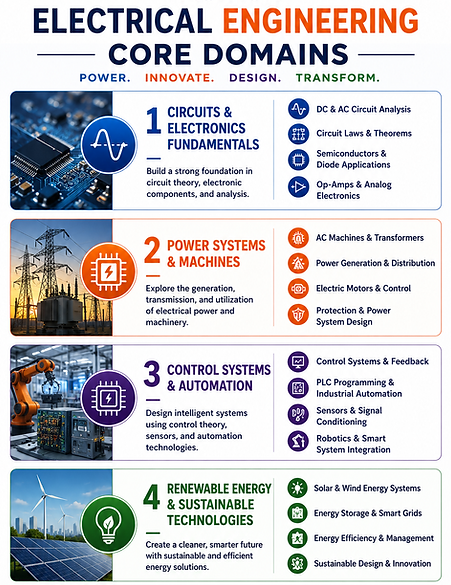
The Electrical Engineering Department focuses on the generation, control, measurement, and application of electrical energy through circuits, electronics, control systems, automation technologies, and digital logic. Students learn how electricity powers modern technology and how engineers design, build, test, troubleshoot, and optimize electrical systems used in homes, businesses, industries, transportation systems, and emerging technologies.
Students explore electrical flow, circuit design, power systems, electronics, control systems, automation technologies, signal behavior, and digital electronics. Through hands-on laboratory experiences, engineering investigations, and project-based learning, students develop technical skills while preparing for careers in engineering, energy systems, electronics, automation, and advanced manufacturing.
Career Pathways
-
Electrical Engineer
-
Electronics Technician
-
Controls Technician
-
Industrial Electrician
-
Renewable Energy Technician
-
Power Systems Engineer
-
Automation Specialist
-
Field Service Engineer
-
Industrial Maintenance Technician
-
Electrical Systems Designer
-
Engineering Technologist
-
Energy Systems Specialist

ELECTRICAL ENGINEERING
The Electrical Engineering Pathway at The XyayX Institute is available to students from Kindergarten through Grade 12 through a carefully structured, vertically aligned curriculum. Students progressively develop their understanding of electrical systems, electronics, control systems, automation technologies, and digital logic while gaining practical experience through laboratory investigations and engineering projects.
As students advance through the program, instruction transitions from foundational electrical concepts and simple circuits to advanced electrical analysis, automation systems, power systems, electronics, and engineering design.
FOUDATIONAL YEARS
Grades K–3: Explorer Level
Students develop an understanding of electricity as a form of energy and learn how electrical systems power the world around them. Activities focus on batteries, wires, lights, switches, and simple circuits while helping students understand cause-and-effect relationships within electrical systems.
Grades 4–5: Builder Level
Students begin constructing electrical systems and exploring how electrical components work together. They investigate series and parallel circuits, switches, conductors, insulators, and electrical safety while completing hands-on engineering challenges and circuit-building activities.
Grades 6–8: Analyst Level
Middle school students transition into formal electrical engineering concepts, including voltage, current, resistance, circuit analysis, electrical measurement, relays, transistors, and control systems. Through laboratory investigations and design challenges, students analyze system performance, troubleshoot circuits, and develop engineering problem-solving skills.
FOUDATIONAL YEARS
Grades 9–10: Designer Level
High school students engage in industry-aligned coursework focused on circuit analysis, electronics, electrical measurement, signal behavior, digital logic, and automation systems. Students build, test, and troubleshoot increasingly complex electrical systems while developing technical documentation and engineering communication skills.
Grades 11–12: Engineer Level
Advanced students engage in power systems, industrial controls, automation technologies, digital electronics, electrical design, and engineering capstone projects. Through advanced laboratory experiences and professional portfolio development, students learn how to design, analyze, optimize, and present engineering solutions while preparing for college engineering programs and technical careers.
